
Prioritize Language
Updated: Jul 16
As families of a deaf or hard of hearing child*, some of the most important decisions you’ll make is how to give your child access to language. It’s not just about getting access to sound or even speech, it’s about ensuring your child has full access to language.
What is the difference between speech and language
Languages are complex, rule-based systems that communicate meaning. They evolve naturally over generations of users to become efficient to learn and use. Languages can be spoken (like English) or signed (like ASL) or tactile (like ProTactile). There are many spoken languages, like Spanish and English, and many sign languages, like American Sign Language (ASL) and Kenyan Sign Language. Learning a language in early childhood is essential for brain development and learning. All languages, both spoken and signed, are equally good "brain food" for children's learning and development.
Speech is the physical act of producing sounds using the mouth, lips, tongue, and voice. It is one way to express language, but it is not the same as language itself. A person can have clear speech without strong language (for example, repeating words without understanding them), or strong language without speech (for example, using a signed language like ASL). Speech is about how language is expressed; language is about meaning.
Children don’t just need access speech or sound, they need full access to language itself.
Getting deaf and hard of hearing children access to language
Many deaf or hard of hearing children are at risk of being cut off from language, especially in their early years. When this happens, it affects not just communication, but can have lasting impacts on their cognitive, social, and academic growth. The good news is that it is totally preventable.
The most important thing is ensuring your child has lots of accessible exposure to language.
Children don’t just need access speech or sound, they need full access to language itself.
Reliable methods for access language
For deaf or hard of hearing children, spoken languages are not fully accessible. Technology like hearing aids and cochlear implants can help give access to sound, but don't always give perfect access to language. In fact, more than half of all deaf children, even those with mild to moderate hearing levels, don’t fully learn spoken language.
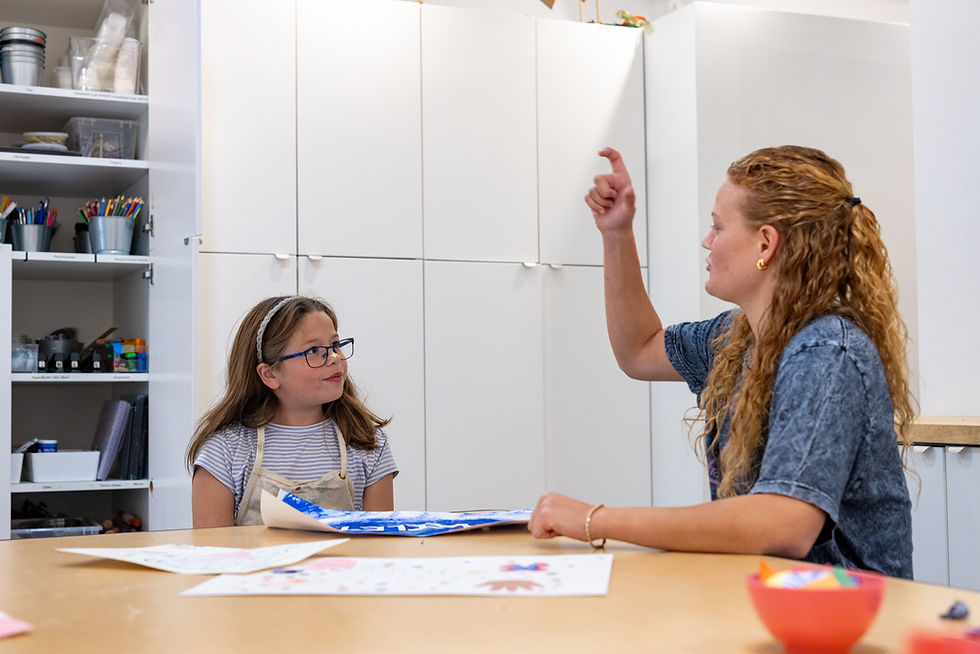
Sign languages like ASL can provide your child with the rich "brain food" they need, and are completely accessible to deaf children. By using sign language early on, you give your child the tools they need to communicate, think, and grow.
Some families plan to focus on spoken language first — an approach often called "listening and spoken language" or LSL — and turn to sign language later if needed.
The challenge with this approach is that there’s no way to predict if a child will fully succeed with spoken language. Children cannot afford the risk of spending those critical early years without full access to language. If a child doesn’t have complete access to language during this vital window, they can miss key opportunities to develop thinking skills, form social connections, and engage with the world. Waiting too long to introduce a fully accessible language can lead to delays that are difficult to overcome. Because sign languages are fully accessible, learning to sign is a great way to ensure your child has a rich, accessible language from the very beginning.
But I am not fluent in ASL, can my child still be successful?
Yes! Many families start learning ASL alongside their child, and both grow together. Even if you’re not fluent at first, what matters most is giving your child consistent exposure to language. Over time, you’ll become more comfortable, and your child will benefit from having access to a full language.
Relying solely on speech is risky, and can delay your child’s language development, especially during those critical early years.
Will learning ASL help my child's English skills?
Yes, learning ASL can actually support your child’s overall language growth, including English. Research shows that using sign language alongside spoken language does not delay speech development. In fact, it can help children develop stronger communication skills in both areas.
Do I have to choose ASL or English?
No! You don’t have to choose one or the other. ASL can be part of a rich, bilingual language experience that supports your child’s development in every way. By giving your child access to sign language, you’re opening up more doors for them. You’re ensuring they can thrive in every setting, whether it’s with spoken language, sign language, or both. It’s about making sure they have the full, rich language they deserve.
Key Takeaways for Families:
Language access is critical. Your child needs a full, accessible language from the start, whether through sign language, spoken language, or both.
Relying solely on speech is risky. It can delay your child’s language development, especially during those critical early years.
Using sign language early on supports your child’s growth in all areas, including communication, social skills, and emotional well-being.
You don’t have to choose. Children can learn both a sign language and a spoken language (or more!).
Full Access from the Start
Giving your child access to sign language ensures they won’t miss out on those critical early language-learning opportunities, even if spoken language takes time to develop. ASL provides a clear, reliable way for your child to express themselves, understand the world around them, and start communicating right away—so important for emotional, social, and cognitive development.
*We use the term deaf and hard of hearing instead of other terms like "hearing impaired" or "hearing loss" or "hearing difference" or "cochlear implant user" because these terms define children as though something is missing or broken and focus on hearing rather than the whole child. We like that the terms deaf and hard of hearing describe people as whole people who have full lives.