

Getting Started
1
Early Language
Early exposure to accessible language is vital for children's development, as early childhood is a critical time for language learning. Providing rich, accessible language during these formative years helps ensure your child builds a strong foundation for communication, learning, and social development.
2
Prioritize Language
What matters most is that your child has full access to at least one language (and you don’t have to choose just one!). While spoken languages may not be fully accessible, sign languages provide a complete, natural language experience, offering the rich linguistic input children need for healthy development.
3
Building a Team
It takes a village to raise a child, and the first step is building the right team. Connecting with deaf role models and language specialists ensures full access to language and learning. Great role models can help children embrace deafness as a strength, fostering confidence, resilience, and pride.
Welcome Families!
When your child is born, meet them, and they show you who they are,
and they show you what they need.
Malia's mother, Mildred Lewis

Resources
Browse our collection of evidence-based resources, all created to promote complete language access for deaf and hard-of-hearing children.
.png)
The Handbook
Just learned your child is deaf or hard of hearing? This guide walks you through why early language matters and how to start, right where you are.
ASL Vocabulary Assessment
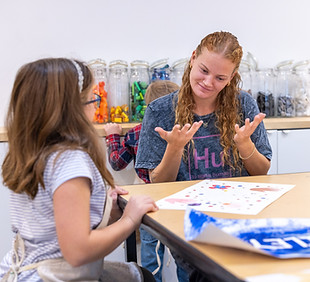
Track your child’s American Sign Language growth with our interactive, in-person assessments, measuring everything from vocabulary to grammar.

Parent-Infant Programs (PIP)
Explore parent-infant programs across the United States that use evidence-based practices to help your deaf or hard of hearing child build language from day one.
_JPG.jpg)
ASL Storybook Library
Discover books to share with your deaf or hard of hearing (DHH) child, chosen for authentic representation and mostly created by DHH authors and families.
Research Blogs
Read our latest thinking on everything from research to community insights and more.


