

Teaching Deaf and Hard of Hearing Children
The Basics
1
Language Rich Environment
A language-rich environment is vital for supporting cognitive development, building strong language foundations, and fostering social connections, empowering deaf and hard of hearing children to thrive academically and socially. With access to communication, children can fully engage, learn, and grow in an inclusive and supportive setting.
2
Education, Not Accommodation
Education for deaf and hard of hearing children should be built around their strengths and needs, not just adaptations of what works for hearing kids. It is not enough to provide interpreters or teach in sign language; we must thoughtfully design a curriculum based on what children bring and where they are going, with a clear scope and sequence tailored to their learning goals.
Design a Progression
We believe in starting with what children know and supporting them in taking the right size next step. In bilingual literacy methods, this often means teaching new concepts in sign language first, ensuring a solid understanding, then layering on instruction in written language. This approach builds confidence and encourages lasting success.
Resources
Browse our collection of evidence-based resources, all created to promote
complete language access for deaf and hard-of-hearing children.
ASL Vocabulary Assessment
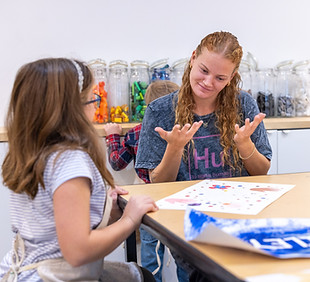
Track your child’s American Sign Language growth with our interactive, in-person assessments, measuring everything from vocabulary to grammar.
.png)

_JPG.jpg)
ASL Storybook Library
Discover books to share with your deaf or hard of hearing (DHH) child, chosen for authentic representation and mostly created by DHH authors and families.